pickleball training Era Pickleball: Progress Faster with Structured Sessions
Momentum in pickleball often follows a stubborn pattern: beginners build a baseline, then stagnation settles in just as skills become more nuanced. Era Pickleball understands this rhythm better than most. The program is built around structured sessions that translate practice into measurable progress. It is not a pseudoscience of quick fixes but a practical approach that blends intention, feedback, and reproducible routines. When players show up with a plan, they leave with confidence. When coaches bring that plan to life, players experience the difference between random drilling and deliberate, goal oriented work.
What makes era pickleball classes distinct starts with the idea that progress accelerates when every minute on the court has a purpose. At eras like erapickleball.com, the offerings—pickleball classes Era Pickleball, pickleball training Era Pickleball, and pickleball coaching Era Pickleball—form a cohesive ecosystem. Players can start with fundamentals, then layer in more complex decision making under pressure. The result is not just better strokes, but better game sense, better endurance, and a sharper competitive instinct.
This article digs into what makes Era Pickleball training effective, how a structured session unfolds from warmup to cool down, and how players at different levels can adapt the system to their goals. It draws on real world experiences from courts across communities where clinics run smoothly, drills are precise, and feedback lands with clarity.
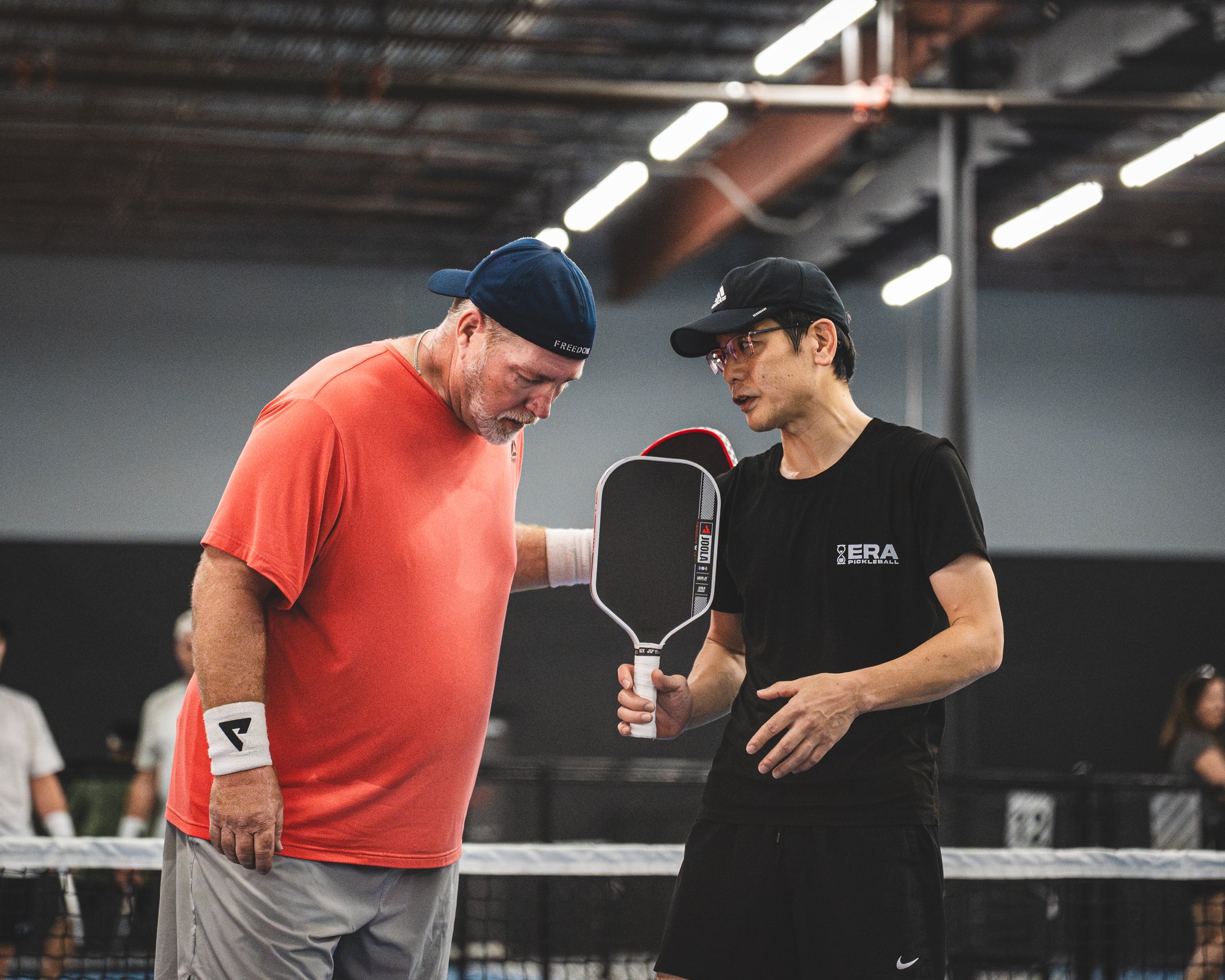
Structured sessions reinvent practice by replacing guesswork with measurable steps. For many players, the first exposure to a program like Era Pickleball pickleball coaching can feel liberating. The coaching team does not simply tell you to swing harder or run faster. They guide you through a curated sequence of drills that map directly to game situations. The aim is consistent, incrementally challenging work that builds technique, decision making, and mental stamina. A well designed session feels like a conversation with the game. It touches many facets at once, yet remains focused enough to yield tangible improvements by the next session.
The core philosophy rests on three pillars: deliberate practice, feedback loops, and scalable progress. Deliberate practice means targeting specific skills during each segment of the workout rather than performing endless, unstructured rallies. Feedback loops refer to the constant exchange between coach and player, with quick adjustments that compound over time. Finally, scalable progress allows players to push their limits in small, safe increments. The goal is not to cram in as much as possible, but to create a reliable schedule that supports consistent improvement.
A session begins before the first ball is struck. Players arrive with a plan they have helped shape during previous sessions. The coach checks a few critical markers: balance on the feet, readiness to move in multiple directions, grip consistency, and the capacity to switch weight from one leg to the other without overcompensating. The warmup is not a mere courtesy; it is an investment. It primes neuro motor pathways, elevates heart rate steadily, and tunes perceptual acuity so later decisions feel less rushed and more accurate. For many players, a strong warmup reduces the cognitive load of in game decision making. When the body is ready, the mind follows more reliably.
The warmup is practical, too. It includes mobility drills that unlock hips and ankles, short court rally patterns that awaken the forehand and backhand sides, and light footwork sequences designed to establish timing. The tempo of these segments matters. A rushed warmup invites sloppy footwork; a sluggish one invites stiffness. A middle ground is ideal: precise, efficient, and progressively challenging.
Length and structure can vary, but the intended outcome remains stable. By the time the session hits the main drills, players have already built a baseline rhythm. The next phase blends technique with decision making. Coaches present a scenario, such as an inbound shot that demands a quick pivot, a drop shot that must clear the kitchen, or a defensive block that transitions into an offensive response. The drills are designed to mimic the pressure of a tournament rally while still keeping the environment supportive. The pace is controlled, not chaotic. The coach watches for mechanics first, then for choices made under tempo. The most valuable feedback is precise and actionable: what to adjust, why it matters, and how to measure progress next time.
Era Pickleball classes are structured to maximize repetition without redundancy. A single drill can be repeated with small, meaningful changes to challenge different aspects of performance. This is not mindless repetition. It is a deliberate build toward fluency where the player can anticipate outcomes, adapt on the fly, and recover quickly after missteps. Fluency emerges when players know their plan for each shot type, understand how to recover after a mis hit, and retain composure under pressure. The structured session keeps the mind focused on the next best move, not on past errors. That mindset is essential for players who want to translate practice into consistent match results.
The coaching approach emphasizes feedback that is concrete and contextual. In a typical Era Pickleball coaching session, feedback comes in short, specific increments. The coach might say, for example, “your paddle path is too generic on the backhand slice; move your trail elbow closer to your hip to generate more control.” The athlete then executes a live correction and immediately answers with a corrected attempt, which the coach confirms or refines. This loop creates a fast learning cycle where insights do not float in the air but anchor in actionable changes. Over weeks, the cumulative effect is visible. Players stop compensating with arm strength and start relying on posture, stance, and rhythm.
A practical reality of any structured program is adaptation. Every body is different, and every court environment imposes its own constraints. Some students will struggle with foot speed against taller opponents; others will wrestle with keeping the paddle in front during transitions. Era Pickleball training acknowledges those differences and builds in room for personalization. Coaches may prescribe alternative footwork patterns, adjust the grip for comfort, or reframe a stroke as a series of micro movements rather than a single motion. The goal is to preserve efficiency while accommodating individual biomechanics. A well designed program does not demand uniformity; it seeks to achieve uniform outcomes through tailored practice.
What does a typical progression look like in Era Pickleball pickleball training? The path usually begins with fundamentals, ensuring everyone has a solid base. The emphasis is on grip, stance, and the consistent contact point with the ball. From there, the focus shifts to shot variety. A player learns to navigate the kitchen with confidence, read the ball sooner off the paddle, and manage pace rather than simply reacting to it. A big part of the journey is translating drill mastery into in game decision making. Players learn to choose between aggressive serves, controlled returns, and smart reset shots that keep opponents under pressure without over committing.
The middle phase introduces pattern recognition under pressure. Players start to recognize common rally arcs and learn to exploit weak pathways in an opponent’s defense. They practice how to vary spin, depth, and placement in ways that force an error or create a favorable angle. This is where the coaching team emphasizes strategic thinking along with technique. The drills become more game specific: situations such as driving a ball to the backhand corner while maintaining coverage on the net, or delivering a drop shot that catches an aggressive net rusher off guard. The goal is to cultivate a sense of what a good option feels like within the flow of a point, not just in isolation.
The late stage of a structured session often dwells on endurance and mental resilience. Players learn to pace themselves across longer rallies, to conserve energy for the key moments, and to manage focus when fatigue sets in. A common pitfall is letting frustration creep in after a few errors. The Era Pickleball coaching staff counters that with short, tactical resets: a breath synced with footwork, a quick cue about where to reestablish balance, a reminder of the plan for the next point. Building mental stamina requires practice that mirrors the intensity of competition but remains within controlled bounds. When the body tires, the mind can still execute the chosen strategy if the process has been internalized through repetition and feedback.
A well designed program does not ignore the importance of recovery. Cool down routines that follow high intensity segments bring the heart rate down gradually, stretch the major muscle groups used in the session, and reinforce a reflective mindset. The cooling phase is not an afterthought. It provides an opportunity to consolidate learning by asking players to articulate what changes felt most effective and what adjustments they want to test next time. The best sessions leave players with clarity about the next steps rather than a vague sense that something was learned but not implemented.
From the perspective of someone who has watched hundreds of players move through structured sessions at Era Pickleball, the most compelling effect is the shift from sporadic improvement to steady, cumulative growth. When players consistently attend training blocks, their progress becomes more predictable. They begin to set benchmarks that feel tangible and fair. A common outcome is a noticeable uptick in win rates during doubles formats, where communication and strategic synergy matter as much as individual technique. In singles, players report smoother movement, quicker recovery, and more confident shot selection under pressure. The improvements are not just physical; they extend into the way players approach practice itself. They learn what to practice, how long to practice, and when to seek feedback to keep moving forward.
For those considering joining Era Pickleball pickleball classes or engaging with era pickleball coaching teams, here are practical considerations drawn from real world experiences on the court and in clinics.
First, start with a baseline assessment. It can come in the form of a quick on court evaluation during a trial session or an initial private session. The aim is to capture a clear picture of strengths, weaknesses, and movement patterns. A reliable baseline informs the design of future sessions and helps track progress with minimal ambiguity. It may reveal simple but impactful changes such as a minor adjustment to grip pressure or a shift in foot position that unlocks a ten percent gain in shot consistency.
Second, commit to consistency over intensity. Structured sessions yield the best returns when players attend regularly and approach each session with a ready mind. Some players fret about the how much time they should invest. The answer varies by goal. If the aim is to compete at a higher level, plan for multiple weekly sessions with a mix of group classes and private coaching as necessary. If the aim is to enjoy the game and stay active, a steady weekly cadence with carefully chosen drills can still deliver meaningful improvement.
Third, embrace deliberate practice as a habit. It is natural to want to rush ahead to fancy shots and flashy sequences. The truth is that fast gains come from repeating reliable mechanics in the earliest stages. The coaching teams at era pickleball training consistently remind players to return to the basics when fatigue or frustration surfaces. That humility is not a weakness; it is the engine of real mastery.
Fourth, cultivate a feedback loop that works for you. Every athlete processes feedback differently. Some respond best to quick corrections on the court, others prefer a brief written summary after a session. In Era Pickleball classes, coaches adapt to individual preferences while keeping the core message intact. The practice of receiving, decoding, and applying feedback becomes a skill in itself.
Fifth, plan for long term development rather than short term hype. The best players show up week after week, not for a dramatic single test but for a consistent sequence of sessions that build a durable skill set. The most effective programs provide a clear ladder of progression. You feel the next milestone approaching, which fuels motivation rather than creating pressure.
Imagine a season where every practice is a chapter in a long story of improvement. The chapters unfold through careful design and execution. A typical arc might look like this: the first chapter centers on mechanics and consistency; the second delves into rally tactics and shot variation; the third tests endurance and mental composure; the fourth emphasizes adaptation and reflective practice. Each chapter contains its own micro goals while contributing to the overarching trajectory. That structure can dramatically shorten the time it takes to reach a new performance plateau. It is not about being the strongest or the most athletic; it is about being the most precise and most adaptable.
For players who want to explore beyond group classes, Era Pickleball also offers pickleball coaching that can be tailored to individual needs. Private coaching provides the most direct channel for technique refinement and strategic development. It enables a coach to tune drills to a player’s unique movement patterns, to calibrate the pace of sessions to match a player’s conditioning, and to target the exact situation a player finds indoor pickleball courts most challenging. In these sessions, the coach observes movement efficiency, shot repeatability, and decision making in live contexts. The benefit is a sharper comprehension of how to steer a rally toward a favorable ending with minimal wasted effort.
The value of coaching remains in the clarity it brings to a player’s practice routine. Coaches can map out a sequence of progressive challenges, ensuring that every drill aligns with the anticipated point outcomes. They can also help players set realistic, time bound goals. Whether it is reducing unforced errors in the transition zone or increasing the effectiveness of the backhand slice, the coaching relationship becomes a structured path rather than a voyage with uncertain bearings.
Seasoned players who already carry a comfortable level of endurance can leverage the system to push into more demanding drills. A common scenario is a doubles partner who seeks better communication patterns at the net. The coach may introduce pre rally cues, defined roles for both players, and a set of responses to common attack patterns. The aim is to improve synchronization so that two players move as a coherent unit rather than two individuals who happen to share a court. When two players share a well practiced framework, their combined efficiency often surpasses the sum of their individual improvements.
The practical impact of these structured sessions shows up in a few recurring ways. First, there is measurable improvement in consistency. Players begin to maintain a stable return of serve, a more reliable half volley, and a better transition into the kitchen when pressure increases. The second recurring outcome is improved decision making under pressure. The ability to choose a smart reset shot instead of an unnecessary risk is a telltale sign that the training has taken root. Third, many players report greater on court stamina. The combination of efficient movement, proper pacing, and mental focus translates into longer rallies and more opportunities to shape the game on their terms.
Beyond individual progress, there is a community dimension that makes Era Pickleball training compelling. The social fabric of pickleball is often the difference between sticking with training for months or chasing fleeting motivation. When you train within a program that emphasizes shared objectives and collaborative improvement, you gain partners who push you to show up, to listen, and to try new things. The courts become laboratories where players observe what works for others, borrow ideas, and apply them to their own game. The learning becomes social as well as technical, and that combination often sustains motivation over the long haul.
For many, the question is practical: how do I get started with Era Pickleball pickleball classes? The answer is straightforward but demands a willingness to invest a little time in planning. Begin by identifying your current level and your primary goals. The next step is to explore the available offerings on erapickleball.com, noting the distinctions between pickleball classes Era Pickleball and pickleball training Era Pickleball. The classes generally focus on skill development in a supportive group setting, while the training programs tend to combine structured practice with feedback and goal oriented progress tracking. If you are unsure where to begin, a kickoff session or a private assessment can provide the clarity needed to place you correctly within the program’s ladder.
Once enrolled, treat the initial weeks as a diagnostic period. This is the time to absorb the rhythm of the sessions, to learn the coach’s language, and to begin building a mental map of your own strengths and limits. It is common to feel challenged as you push into higher levels of tempo and complexity. Do not mistake this discomfort for failure. It is a signal that the body and mind are adapting to new demands. A thoughtful approach to the early weeks ensures you do not burn out and that you retain the curiosity necessary to keep improving.
Over time, the structure of Era Pickleball training tends to reveal its value in a few practical ways. You notice fewer unforced errors in critical exchanges, a more efficient path to the ball, and an enhanced capacity to anticipate an adversary’s next move. You begin to use the court more effectively, entering points with a plan rather than reacting to every shot. Your communication with doubles partners becomes more precise, and your transitions between offense and defense become more economical. These improvements are not accidents. They are the fruit of disciplined practice, explicit objectives, and feedback that you can translate into the next point.
The long road of improvement is rarely linear. There are peaks and plateaus, moments of breakthrough, and stretches that feel stubborn. That is where the value of a well designed program comes through most clearly. A robust structure acts as a stabilizer during plateaus, offering a clear path forward, a new set of drills to re engage with, and a different lens through which to interpret old problems. It also creates a reliable schedule that reduces decision fatigue. With consistent exposure to a curated mix of technique, pattern play, and mental training, your brain learns to recognize patterns more quickly and to respond with a higher level of poise and precision. The improvement becomes less about raw physical ability and more about building efficient habits of play.
The practical reality for many players is that a well designed program reduces the friction of practice. You do not have to reinvent the wheel for every session. Coaches bring a library of proven drills, each chosen to target a specific element of the game. You benefit from a cadence that has been refined through years of on court observation, not guesswork. The structure keeps you honest. It prevents you from flitting between favorite shots or chasing novelty for novelty’s sake. It anchors your improvement in a framework that has shown results in many different hands and court environments.
If you are evaluating options for pickleball coaching or classes, consider the following questions to guide your decision:
- Do the offerings emphasize structured sessions with explicit objectives?
- Is there a clear progression path that can be tracked over weeks and months?
- Do coaches provide timely, actionable feedback and adjust plans based on performance?
- Are there opportunities for both private and group formats to suit different learning styles?
- Can you access resources and drills outside of live sessions to reinforce learning?
Answers to these questions will help you determine whether Era Pickleball classes or coaching align with your needs. The right program should feel neither overly rigid nor dangerously lax. It should balance accountability with curiosity, ensuring you leave each session with something that you can apply immediately and something larger you can pursue over time.

The landscape of pickleball training has grown crowded in recent years, yet the most dependable programs share a common DNA. They treat practice as a craft, not a sprint. They cultivate an environment where effort is intentional, feedback is precise, and progress is visible. They connect people to a community that values steady improvement over flashy performance. Era Pickleball embodies this philosophy by delivering a practical, proven route for players who want to progress faster through structured sessions.
As you consider your next steps, imagine your progress a few months from now. You are standing in the center of the court with a smoother, more consistent stroke. Your movement across the court feels economical, and your shot selection shows a deeper understanding of how to exploit the court geometry. You can anticipate your opponent's options sooner, and you recover into the rally with fewer wasted motions. You realize that the speed of your improvement is not an accident but a function of the deliberate design behind the training you have chosen. That realization is empowering, because it means you are not relying solely on natural talent or random luck. You are following a plan that makes the most of your time on the court.
The Era Pickleball approach to training is not a one size fits all prescription. It is a framework that respects the individuality of each player, the dynamics of different court environments, and the realities of competition. The best programs offer flexibility within structure. They provide a clear map while allowing players to tailor the journey to their own goals. They reward discipline and curiosity in equal measure.
In conclusion, the value of structured sessions in Era Pickleball training lies not in the promise of rapid, miraculous improvement but in the reliability of the process. It is a practical philosophy that makes practice meaningful. It turns repetitive drills into disciplined, purposeful work that translates to better points, better rallies, and better matches. It gives players a language for their development and a plan for their growth. For anyone serious about progress, the choice to pursue era pickleball classes, pickleball training, or pickleball coaching is an investment in the long arc of skill, strategy, and consistency. The payoff is not just a higher rating or a deeper bench of techniques; it is a new confidence in the game, a steadier hand at the moment of truth, and a smarter, more enjoyable way to play pickleball.
Two pragmatic takeaways live beside the rhythm of a typical session. First, treat every drill as energy management: control the pace, preserve your balance, and execute with precision rather than force. Second, let feedback become your compass. Listen, test, and apply with intent. When you internalize that mindset, progress ceases to be a mystery and becomes a predictable outcome of disciplined practice. If you are curious about how much faster your progress could be with a structured, goal oriented framework, explore the offerings on erapickleball.com and see how Era Pickleball pickleball training and coaching could redefine your relationship with the game. The difference is not about talent alone but about the way you practice, the language of your practice, and the patience you bring to the process.